23
Cloud Misconfigs
Identified

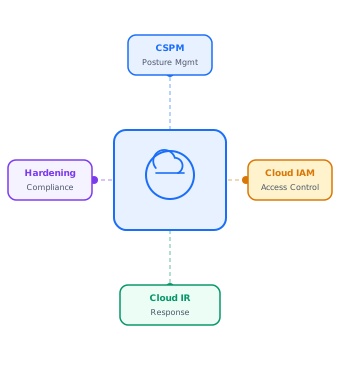
Public S3 buckets, unrestricted security groups, disabled logging, root account usage without MFA, these are not rare findings, they are the norm in cloud environments that grew faster than their security governance. We continuously assess your cloud configurations across AWS, Azure, and GCP, identify misconfigurations and policy violations before attackers or auditors surface them, and track remediation so your posture improves rather than drifts back the moment the engagement ends.

In cloud environments there is no network perimeter, identity is the only boundary between an attacker and your data. Over-permissioned service accounts, wildcard IAM policies, and human identities with administrative access they no longer need are the attack paths that get exploited most. We review every IAM policy, service account permission, and role assignment across your cloud accounts, eliminate excess permissions, and implement least privilege controls that reduce your blast radius without breaking your workloads.

Architecture decisions made under delivery pressure, VPCs with overly permissive peering, workloads communicating without encryption, internet-exposed management interfaces, logging disabled to save cost, create security debt that compounds as the environment grows. We evaluate your cloud architecture against AWS Well-Architected, Azure Security Benchmark, and GCP security best practices, covering network design, encryption, service exposure, logging, and inter-workload communication. You get a prioritized finding set with remediation guidance your engineering team can execute.

Cloud attacks look different from on-premise attacks, API key abuse, impossible travel logins, large-scale data enumeration through storage APIs, and lateral movement between cloud accounts do not trigger traditional on-premise detection rules. We integrate cloud-native logging (CloudTrail, Azure Monitor, GCP Audit Logs) with your SIEM or monitoring platform and build detection logic around the attack patterns actually used against cloud infrastructure. Your team gets alerts on what matters, not noise from tools that were not designed for cloud.

A SOC 2 or ISO 27001 audit that covers cloud infrastructure will check CIS Benchmark compliance, encryption at rest and in transit, access logging, and key management practices. Organizations that assume their cloud provider handles this are routinely surprised by what falls on them. We map your cloud environment against CIS Benchmarks, ISO 27001, SOC 2, and your industry-specific requirements, then deliver hardening recommendations that are prioritized by risk and written for the engineers who will implement them.

Cloud incidents move faster than on-premise incidents, a compromised API key can exfiltrate data across multiple regions in minutes, and forensic evidence is spread across logs that most teams do not know to preserve. When a cloud security incident occurs, the first hour determines how much damage is done. We provide rapid response to cloud incidents, account compromises, data exposure events, unauthorized resource creation, and lateral movement between accounts, with full investigation, containment, and recovery support from engineers who work in cloud environments daily.
Understanding Cloud Security
What is cloud security?
Cloud security is the set of policies, controls, and technologies that protect data, applications, and infrastructure running in cloud environments. Under the shared responsibility model, your cloud provider (AWS, Azure, GCP) secures the underlying infrastructure, but you are responsible for everything above it: configurations, access controls, data encryption, network security, and workload security. Most cloud breaches exploit failures in the customer responsibility layer, not the provider's.
Who needs it?
Any organization running workloads on AWS, Azure, or GCP, or using cloud-hosted SaaS platforms that store sensitive data, needs cloud security. It is especially critical for organizations scaling rapidly (where security governance lags infrastructure growth), those undergoing compliance audits, and those that have experienced a cloud-related security incident and need to understand and close the exposure.
Why does it matter?
Misconfiguration is consistently the leading cause of cloud data breaches, not sophisticated zero-days. A single misconfigured S3 bucket, an overpermissioned service account, or a publicly exposed API can expose gigabytes of customer data within hours of being exploited. Cloud environments change constantly, and a configuration that was secure yesterday may not be today after a developer deploys a new service.
How is cloud security managed?
Effective cloud security combines continuous posture management (CSPM tools monitoring configurations in real time), identity hardening (enforcing least privilege across all cloud IAM), network controls (segmentation, encrypted transit, restricted egress), and threat detection tuned to cloud attack patterns. It is not a one-time project, cloud environments change daily and security governance must keep pace.
Our AWS environment had grown with the startup and nobody had done a proper security review. garrisonOne found 23 misconfigurations including two that left S3 buckets publicly accessible, and helped us remediate everything within three weeks. The enterprise security questionnaire became much easier to answer after that.
Client results
Technology / SaaS
A seed-stage SaaS startup had customer data in a public S3 bucket. garrisonOne conducted a full AWS security assessment against CIS benchmarks and hardened the environment in 4 weeks.
Industry focus

Penetration testing prices vary enormously, from a few thousand pounds for a focused web application test to well over £50,000 for a full red …
Read More
Both penetration testing and vulnerability assessments are designed to find weaknesses in your systems. But they work very differently, and confusing …
Read More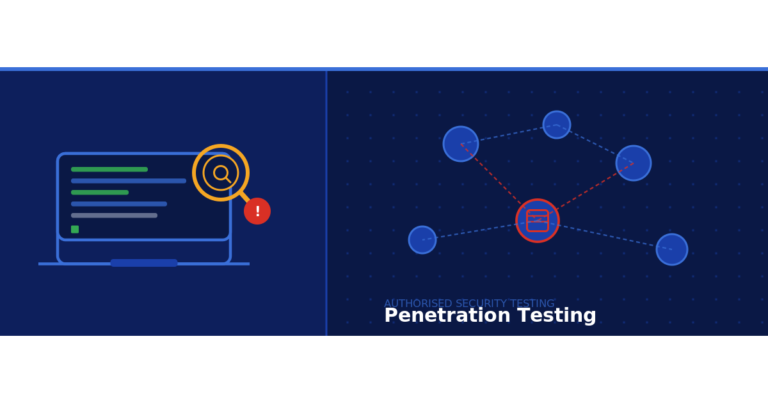
Every business has security weaknesses. The question is whether you find them first, or an attacker does. Penetration testing (also called pen …
Read MoreCloud environments are dynamic, shared, and configured through code and APIs rather than physical hardware and network cables. The attack surface is different, the responsible parties are split between you and the provider, and misconfigurations that would be harmless on-premise can expose data to the entire internet in seconds. Security approaches built for traditional IT don't translate directly.
Cloud providers secure the underlying infrastructure they run. You are responsible for securing everything you put on top of it, including configurations, access controls, data, and workloads. Many organizations misunderstand this boundary and assume the provider handles more than they actually do, which creates significant gaps.
CSPM is the continuous monitoring and assessment of your cloud configurations to identify misconfigurations, policy violations, and security risks. Rather than a point-in-time review, CSPM provides ongoing visibility into your cloud posture so problems are caught as they appear, not months later during an audit or after a breach.
Yes. Many organizations run workloads across AWS, Azure, and GCP simultaneously, each with its own security model. We provide coverage across all three platforms and can give you a unified view of your security posture rather than managing each cloud environment in isolation.
Extremely common. Misconfiguration is consistently identified as one of the leading causes of cloud security incidents. Overly permissive storage buckets, publicly exposed databases, weak IAM policies, and disabled logging are found in a large proportion of cloud environments we assess, including mature organizations with dedicated IT teams.
Both. We work with organizations at any stage of their cloud journey, from securing a cloud environment that has already grown organically over time to building security into new infrastructure from the start. Remediating an existing environment is often more common and we are well practiced at it.
Cloud IAM involves service accounts, federated identities, API keys, and role-based permissions that operate differently from on-premise user directories. Permissions in cloud environments are also far easier to accidentally over-grant through infrastructure-as-code templates. We treat cloud identity as a dedicated security domain requiring its own controls and review process.
Most major frameworks have cloud-specific guidance or controls that apply. These include ISO 27001, SOC 2, CIS Benchmarks for AWS, Azure, and GCP, PCI-DSS for payment data in the cloud, and GDPR for personal data processing. We map your cloud environment against whichever frameworks are relevant to your business and regulatory obligations.
Resources
Company
Contact


