23
Control Gaps
Identified

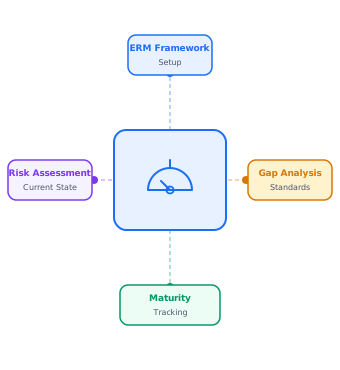
We design and implement an ERM framework that gives your organization a structured, repeatable process for identifying, evaluating, and managing information security risks. The framework is built around your business context, risk appetite, and governance requirements rather than a generic template applied without thought.

We conduct a thorough review of your current governance structures, processes, and control environment to understand where you actually stand today. This covers technology controls, operational processes, organizational roles and responsibilities, and the policies and procedures that govern how security is managed across your business.

We compare your current state against applicable standards, regulatory obligations, and internal expectations to identify specific gaps. Whether you are working toward ISO 27001, SOC 2, GDPR, PCI DSS, or a combination of frameworks, we give you a precise gap report that shows exactly what is missing and why it matters.

We identify information security risks relevant to your business, evaluate their likelihood and potential impact, and prioritize them in a way that enables your leadership to make informed decisions about where to invest. Risk prioritization is tied to real business context, not just theoretical severity scores.

We translate assessment findings into a clear, sequenced action plan with remediation themes, ownership expectations, and realistic timelines. The roadmap is built for execution, not just documentation, so your team knows what to work on first, who is responsible, and what good looks like when each item is addressed.

Risk management is not a one-time exercise. We provide recommendations for building ongoing risk management practices into your organization and can support periodic reassessments to track maturity improvements over time as your control environment strengthens and your business evolves.
We needed to understand our risk posture before our board would approve a security budget. garrisonOne ran a comprehensive risk and gap assessment, presented findings in business terms our board could act on, and gave us a prioritized roadmap that became the foundation of our three-year security investment plan.

Penetration testing prices vary enormously, from a few thousand pounds for a focused web application test to well over £50,000 for a full red …
Read More
Both penetration testing and vulnerability assessments are designed to find weaknesses in your systems. But they work very differently, and confusing …
Read More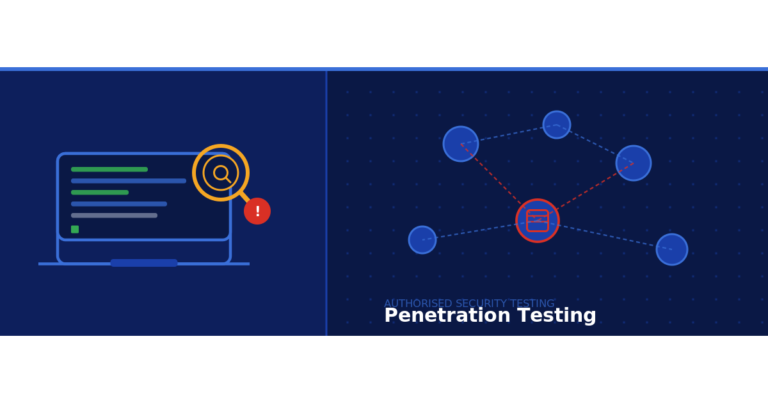
Every business has security weaknesses. The question is whether you find them first, or an attacker does. Penetration testing (also called pen …
Read MoreRelated Services: Security Assessment & Audit | Security Policy Documentation | Virtual CISO Services | All Compliance Services
A risk assessment is a structured process for identifying the information security risks that could affect your organization, evaluating how likely they are to occur and what the impact would be, and deciding how to treat them. It gives your leadership a factual basis for making decisions about where to invest in security controls and how much risk is acceptable.
A gap analysis compares your current control environment against a target state, such as a specific compliance framework, regulatory requirement, or internal security standard. It identifies the specific areas where you fall short and what needs to be addressed. Most organizations use a gap analysis as the first step before starting a compliance or security improvement program.
A risk assessment focuses on identifying and evaluating threats and vulnerabilities relevant to your specific business. A gap analysis compares your current state against a defined standard or framework. They are complementary, and many organizations benefit from running both together. A gap analysis tells you what controls are missing; a risk assessment tells you which missing controls matter most.
We conduct gap analyses against ISO 27001, SOC 2, GDPR, HIPAA, PCI DSS, ISO 22301, NIST CSF, and CIS Controls, among others. If your industry has a specific regulatory framework, we can assess against that as well. Many engagements cover multiple frameworks simultaneously to reduce duplication of effort.
A focused gap analysis against a single framework for a mid-size organization typically takes two to four weeks. A comprehensive enterprise risk assessment covering multiple domains and frameworks may take four to eight weeks. We define scope and timeline clearly at the outset so you know what to expect.
You receive a detailed findings report covering the current state across assessed domains, specific gaps against the applicable standard or framework, risk ratings for each finding, and a prioritized remediation roadmap with clear ownership and sequencing. We also provide an executive summary for leadership that captures the key messages without requiring a technical background to understand.
Most compliance frameworks require at least an annual risk assessment. We recommend more frequent reviews following significant changes to your business, technology environment, or threat landscape. Building a lightweight ongoing risk management process in addition to formal annual assessments helps maintain an accurate picture of your risk exposure throughout the year.
Yes. The gap analysis output serves as a direct input to ISO 27001 implementation, SOC 2 readiness, or any other certification program. It defines the work program and sets priorities. Starting a certification engagement with a gap analysis typically reduces overall time and cost because effort is directed precisely where it is needed.
Resources
Company
Contact


